
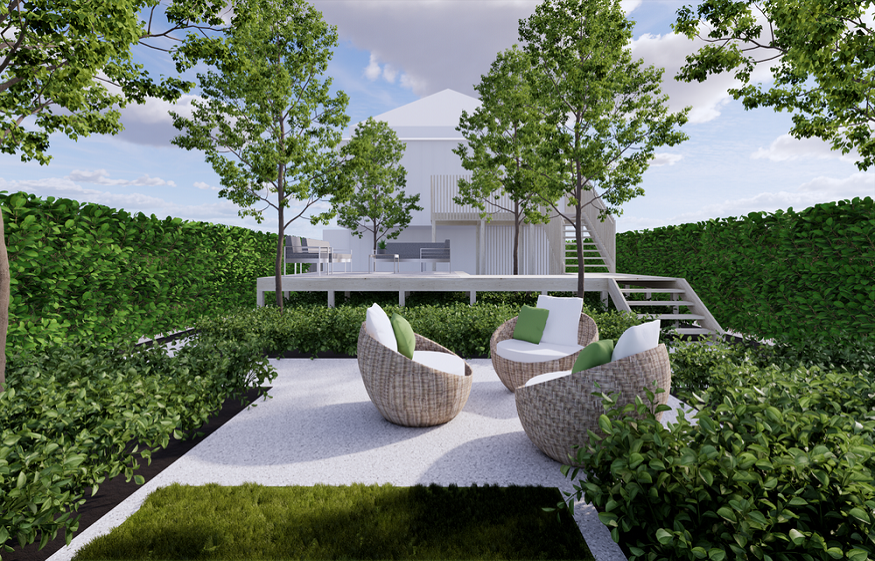
Frame the View: Small Design Details That Transform Your Garden Outlook
The magic of a garden often lies in the way you experience it. Some spaces dazzle with colour, others offer peace through simplicity. But beyond plants and furniture, one of the most powerful ways to shape a garden’s character is by framing what you see.
The view from your garden, whether it is of rolling hills, rooftops, or the back of a neighbour’s shed, can be transformed with a few thoughtful design details. When you frame a view, you control how it is seen. You focus attention, highlight the best parts and soften the rest.
This is not about having a postcard-perfect vista. It is about shaping perspective, guiding the eye and turning even modest spaces into something considered and beautiful.
Understand your starting point
Every garden has a view. Sometimes it is obvious. Other times it is a bit hidden. Start by walking through your garden and looking out from different angles. Sit where you usually relax. Stand by the back door. Look out from upstairs windows.
Read More : Frame the View: Small Design Details That Transform Your Garden Outlook
What do you see? What grabs your attention? What would you rather not notice? These observations help you understand which views need celebrating and which could do with a little distraction.
By identifying focal points and weak spots, you can begin to decide how to lead the eye.
Use structure to frame natural beauty
One of the simplest ways to guide attention is to place a frame around it. A pergola, an archway or even a carefully positioned trellis can draw the eye towards a tree, sculpture or distant view.
These frames do not have to be large or complicated. A wooden arch with climbing plants, a gap in a hedge or a wide opening in a screen all suggest direction and focus. They invite the eye to look through, beyond and into something more.
This technique is especially useful in long, narrow gardens. It helps break up space and adds rhythm to the layout.
Play with height and layers
Framing is not just horizontal. It can also be vertical. Think of a tree canopy that creates a ceiling, or a tall hedge that acts like a wall. These elements help define a garden’s volume and set the stage for what comes next.
By combining low planting with taller elements like screens, trellises or small trees, you create depth. This layering makes the garden feel bigger and more complex, encouraging exploration.
Even a single raised bed or built-in bench can create a new sightline that feels fresh and focused.
Use colour to guide the eye
Colour can be a powerful framing tool. Bright flowers in one area naturally pull the gaze. A painted wall, bold cushion or striking planter does the same.
If you want to highlight a specific view, place your most vibrant or interesting features in line with it. The eye will follow the colour. If there is something you would rather downplay, keep it muted and simple.
This technique helps balance the garden. It allows the most beautiful or useful elements to take centre stage without forcing the point.
Define edges for a cleaner outlook
Sometimes the problem with a garden view is not what is in it, but how undefined it feels. A lack of boundaries can make everything blur together. Adding simple edging, fencing or balustrades helps separate one area from another.
Balustrades in particular are a subtle but effective way to create definition. On raised decks, terraces or steps, they provide safety and structure while allowing clear sightlines. A clean edge gives visual order and makes the view beyond feel more intentional.
Homeowners looking for a modern and durable option often choose composite balustrades. They work well in both traditional and contemporary settings and require very little upkeep over time.
Incorporate mirrors and reflections
In small or enclosed gardens, you can create the illusion of more space by bouncing the view around. Mirrors placed carefully on fences or walls reflect light and greenery. They add depth and visual trickery without altering the layout.
Make sure mirrors are outdoor-safe and positioned where they reflect something worth seeing. Avoid placing them where they will bounce sunlight directly into seating areas or windows.
Water features also reflect and frame views, especially when placed opposite a favourite plant or sculpture.
Consider movement and change
A good view should not be static. It should evolve. Framing a space with plants that shift through the seasons adds interest and energy. Spring bulbs, summer blooms, autumn colour and winter structure keep the outlook alive year-round.
Movement matters too. A breeze through grasses, the flutter of bamboo or the sway of vines brings animation. It catches the eye and creates a mood that changes hour by hour.
These dynamic elements make a framed view feel more like a living painting than a fixed window.
Draw attention inward
Not every view has to point outwards. Sometimes the most powerful design move is to frame something within the garden itself.
This could be a cosy seating area, a small water feature, a raised planter or a piece of garden art. When framed by hedging, screens or planting, it becomes a destination. It creates a focal point that brings people deeper into the space.
Think of it as inviting attention rather than simply directing it.
Keep it simple
Framing a view does not mean cluttering it. In fact, the most successful designs often involve taking things away.
Prune trees to reveal a view. Clear out overgrown corners to let in light. Reduce planting in one area so that another can shine.
Editing is part of framing. It helps the garden breathe and allows the important features to stand out.
For wider commercial, hospitality, or public-facing projects, small supporting details can make the finished space feel more complete. Composite decking can provide a durable, low-maintenance surface for terraces, entrances, outdoor seating areas, and customer-facing spaces; while hand dryers can support cleaner, more efficient washroom facilities; while traditional signage can add character, direction, and brand presence; while digital signage can share changing information, promotions, menus, or wayfinding updates clearly.
Final thoughts
The way you frame your garden’s views has a huge impact on how the space feels. It shapes what you notice first, where you pause and how the garden reveals itself over time.
Read More : Rental Market Trends in Wimbledon According to Estate Agents
You do not need a grand vista or a sweeping lawn. With a few well-placed design details, you can turn even the most modest outlook into something layered, personal and beautiful.
Whether it is through structure, planting, light or layout, framing your view is one of the most subtle yet powerful design choices you can make. It transforms the garden from something you look at into something you experience.
Leave a Reply
You must be logged in to post a comment.