
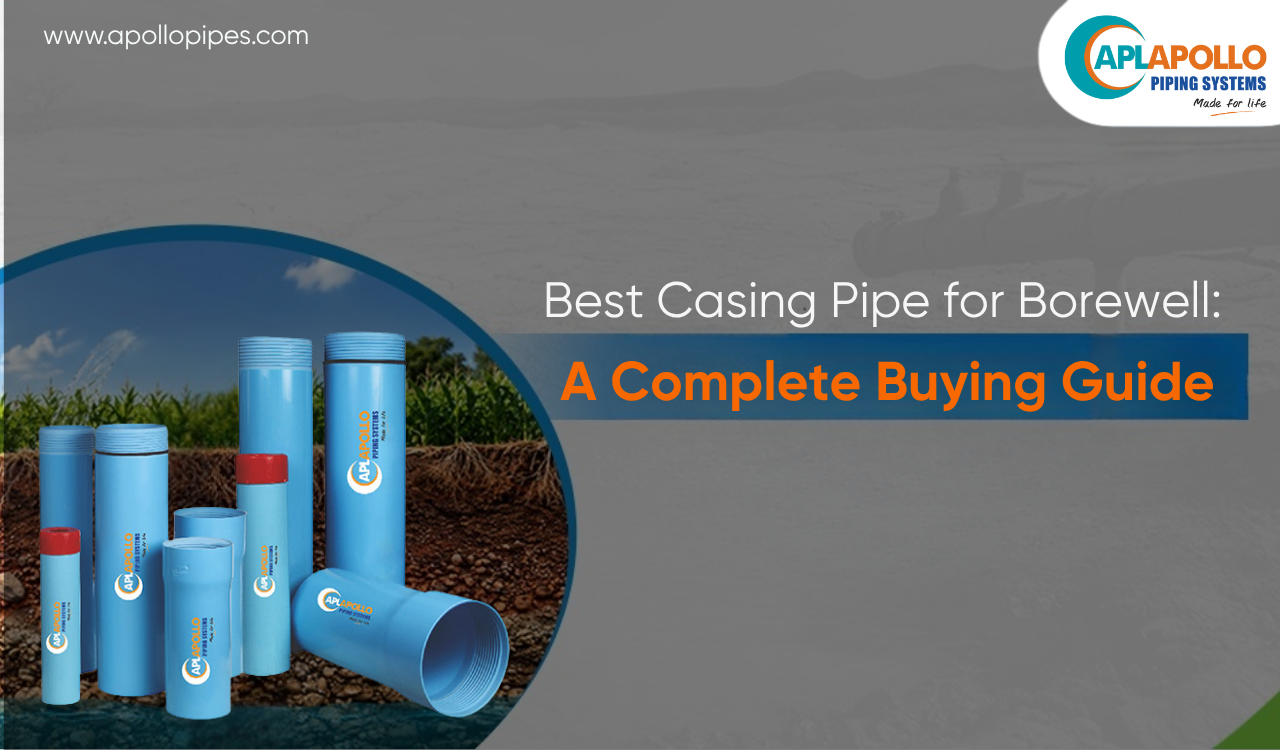
Best Casing Pipe for Borewell: A Complete Buying Guide
Choosing the best casing pipe for borewell is an important decision for homeowners, farmers, builders, and borewell contractors. A well-selected casing pipe helps support the borewell structure, protect it from soil and debris, and maintain suitable conditions for water extraction. However, the right choice depends on factors such as pipe material, borewell depth, ground conditions, diameter, and installation requirements.
Among the available options, uPVC casing pipes are commonly considered for borewell applications because of their lightweight construction and resistance to corrosion. This guide explains the key factors to evaluate before purchasing borewell casing pipes, helping you make a practical choice based on your project’s requirements.
What Are Borewell Casing Pipes?
Borewell casing pipes are installed inside drilled wells to support the borehole walls and help prevent the entry of loose soil, sand, and other unwanted materials. They provide structural support and help maintain the integrity of the borewell during and after drilling.
Casing pipes are available in different materials, sizes, and designs. The appropriate option depends on the geological conditions, drilling depth, groundwater requirements, and type of borewell. A properly selected casing system can help reduce operational problems and support the long-term functionality of the well.
Read More: How to Prevent Concrete From Cracking
Why Choosing the Right Casing Pipe Matters
A borewell casing pipe is exposed to underground conditions, including soil pressure, moisture, and potential mechanical loads. Selecting an unsuitable pipe can lead to deformation, joint problems, or difficulties during installation.
- The right casing pipe helps:
- Support the borewell walls and reduce the risk of collapse.
- Protect the well from soil and debris entering the borehole.
- Support proper water extraction and well construction.
- Improve installation reliability when the pipe is compatible with site conditions.
- Contribute to the service life of the borewell system.
- The best casing pipe for borewell should therefore be selected based on engineering requirements rather than price alone.
Factors to Consider When Buying the Best Casing Pipe for Borewell
1. Pipe Material
Material selection is one of the first factors to evaluate. uPVC, steel, and other casing materials may be used depending on the borewell design and ground conditions.
uPVC casing pipes are lightweight, corrosion-resistant, and relatively easy to handle. Steel pipes, meanwhile, may be selected for applications requiring particular mechanical properties. The final choice should account for the expected loads, installation method, and applicable technical requirements.
2. Strength and Durability
The casing pipe must withstand the conditions encountered during installation and operation. Consider the pipe’s wall construction, resistance to external loads, and suitability for the planned borewell depth.
A pipe’s strength should not be assessed based solely on its material. Its design, dimensions, manufacturing quality, and installation conditions also influence performance.
3. Diameter and Pipe Size
Selecting the correct diameter is essential for ensuring compatibility with the borehole, pump system, and other components. The required size depends on the borewell design, water demand, and drilling specifications.
Consult the drilling contractor or a qualified engineer before finalising the diameter. Choosing a pipe without considering the complete system can create installation and maintenance difficulties.
4. Depth and Ground Conditions
Borewell conditions vary from one location to another. Soil type, rock formations, borewell depth, and groundwater characteristics all affect casing requirements.
Deeper borewells or sites with unstable formations may require different casing specifications from shallow installations. A site assessment and professional recommendation can help determine the appropriate pipe material, strength, and dimensions.
5. Pressure and Load Resistance
Casing pipes must be suitable for the mechanical loads they may experience during installation and use. External soil pressure, handling forces, and borewell depth should be considered when selecting a product.
Always check the manufacturer’s documented technical specifications and ensure that the selected pipe meets the project’s engineering requirements.
6. Plain and Slotted Casing Pipes
Borewell casing pipes are generally selected according to their role in the well construction system. Two common options are plain casing pipes and slotted casing pipes.
- Plain casing pipes: These provide structural support and help protect the borewell from surrounding soil and debris. They are used in sections where water entry through the pipe wall is not required.
- Slotted casing pipes: These contain openings that allow groundwater to enter the well while helping retain the surrounding formation or gravel pack, depending on the well design.
- The placement and slot design should be determined according to the aquifer, formation characteristics, and well construction plan. Selecting the correct type is important for maintaining efficient groundwater collection and reducing the entry of unwanted particles.
Types of Borewell Casing Pipes
Apart from plain and slotted designs, casing pipes may differ in material, wall construction, and load-bearing capacity. uPVC casing pipes are an option for applications where corrosion resistance and ease of handling are important.
The choice between uPVC and other materials should be based on the project requirements. Factors such as borewell depth, soil pressure, installation conditions, and applicable standards should be assessed before making a purchase.
Applications and Installation Considerations
Borewell casing pipes are used in domestic water supply, agricultural irrigation, industrial groundwater systems, and other well construction applications. Their selection and installation should be coordinated with the drilling process.
Before installation, confirm that the pipe diameter matches the borehole and intended equipment. Ensure that joints are assembled according to the manufacturer’s instructions and that the casing is positioned appropriately for the geological conditions.
Regular inspection of accessible components, monitoring of water quality, and timely attention to installation or pumping problems can help support the borewell system’s long-term operation.
Cost-Effectiveness and Service Life
The initial price of a casing pipe is only one part of the total project cost. Transportation, labour, jointing, installation, and potential maintenance should also be considered.
Read More: Which roof covering to choose to save money on the construction of your house?
A lightweight pipe may simplify handling and transportation, while suitable durability and corrosion resistance can support long-term use. However, cost-effectiveness depends on the specific application, installation quality, and service conditions. Choose a product that meets the technical requirements rather than selecting solely on the lowest purchase price.
APL Apollo Casing Pipes
APL Apollo offers uPVC casing pipes for borewell applications, including plain casing pipes and screen (slotted) pipes. These pipes are designed for domestic, irrigation, industrial, and mining borewells, and are also suitable for rainwater harvesting applications. The manufacturer highlights lightweight construction, easy transportation, fast jointing, and installation convenience, along with corrosion resistance, chemical resistance, and resistance to bacteria among its documented product benefits.
APL Apollo lists casing pipes in sizes from 35 mm to 350 mm and identifies IS 12818 for its plain and slotted casing pipes. Its product information also includes ribbed screen pipes and describes their use in helping keep gravel pack and foreign particles out of borewell water. Buyers can review the applicable product specifications, borewell depth requirements, and installation guidance before selecting a suitable option for their project.
Leave a Reply
You must be logged in to post a comment.